Commercial Solar in Canmore: Inside a 32.83 kW Tile Roof Installation

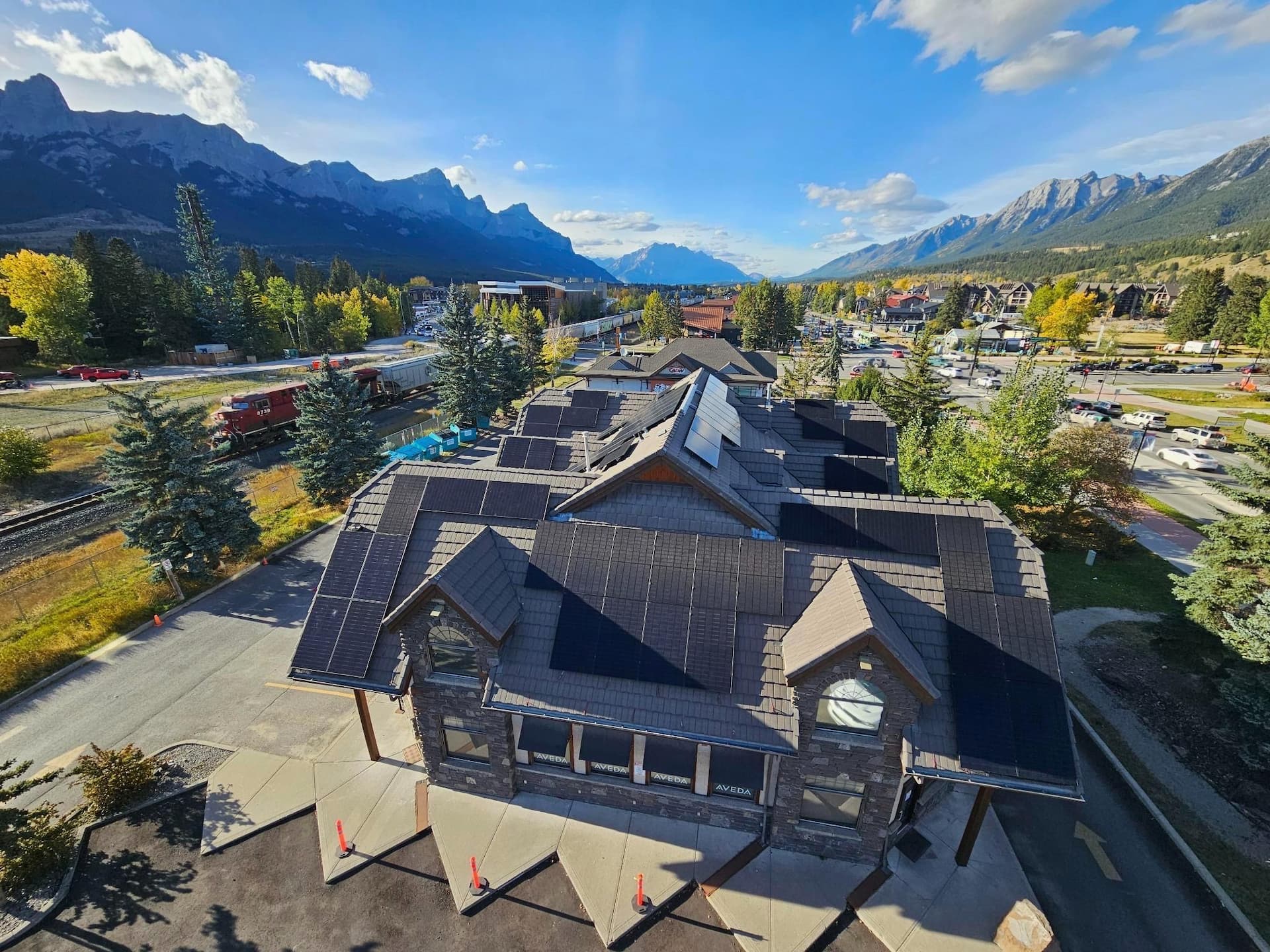
Before the first panel went onto Jenny Wong's downtown Canmore building, Nuvo Renewables had already made several trips to the property.
There were measurements to take, electrical details to check, and questions to work through together. Above the four shops sat the project's biggest installation challenge: a steep roof finished in a blend of terracotta and concrete tile.
Jenny wanted lower electricity bills for the building. She's environmentally minded too, so generating renewable power mattered on its own terms. Meeting both goals meant sizing a system against how the building actually uses electricity, then giving that roof the weeks it was going to take.
| Project at a Glance | Details |
|---|---|
| Property | Four-unit commercial building, downtown Canmore |
| Tenants | Four shops, including a flower shop, hair salon, and parts store |
| System | 32.83 kW, 65 LONGi 505 W panels |
| Inverters | APsystems QT2 microinverters |
| Roof | Terracotta and concrete tile blend, flush-mounted |
| Completion and inspection | September 30, 2026 |
How Did This Canmore Commercial Solar Project Start?
The project took shape through site visits and conversations with Jenny. Understanding the building meant looking past the available roof space to the electrical service and the work the roof itself would demand.
Nuvo's lead master electrician came out personally. Jenny asked her questions face to face and met the people who would be doing the work.
Before installation began, the team had spent hours assessing the building and working through the details with Jenny.
Can You Install Solar Panels on a Terracotta and Concrete Tile Roof?
Yes. On this four-unit commercial building in Canmore, Alberta, crews carefully lifted the terracotta and concrete tiles at each attachment location, installed the mounts and flashing to keep water out, then replaced the surrounding tiles.
They repeated that process across the roof, preparing the supports for all 65 panels.
Why Did the Installation Take Nearly Three Weeks?
The roof set the pace. Each mounting location needed careful attention, while steep slopes, September weather, and an active downtown street added to the planning. Together, those conditions meant the crew spent nearly three weeks on site.
How Much of the Building's Electricity Will the System Produce?
The system is expected to generate 35,344 kWh of electricity each year, enough to offset approximately 88% of the building’s annual electricity use. Actual bill savings will depend on electricity rates and when the building uses power.
Reaching that level of coverage starts with understanding how the building uses electricity. With four businesses under one roof, different operating hours and equipment shape that demand. A hair salon and a parts store can have very different electricity needs. That’s why our intake process includes gathering electricity bills, understanding business operations, and assessing the property’s roof and electrical setup. Those details help us design a system around the building’s needs and give the owner a realistic picture of what solar could deliver.
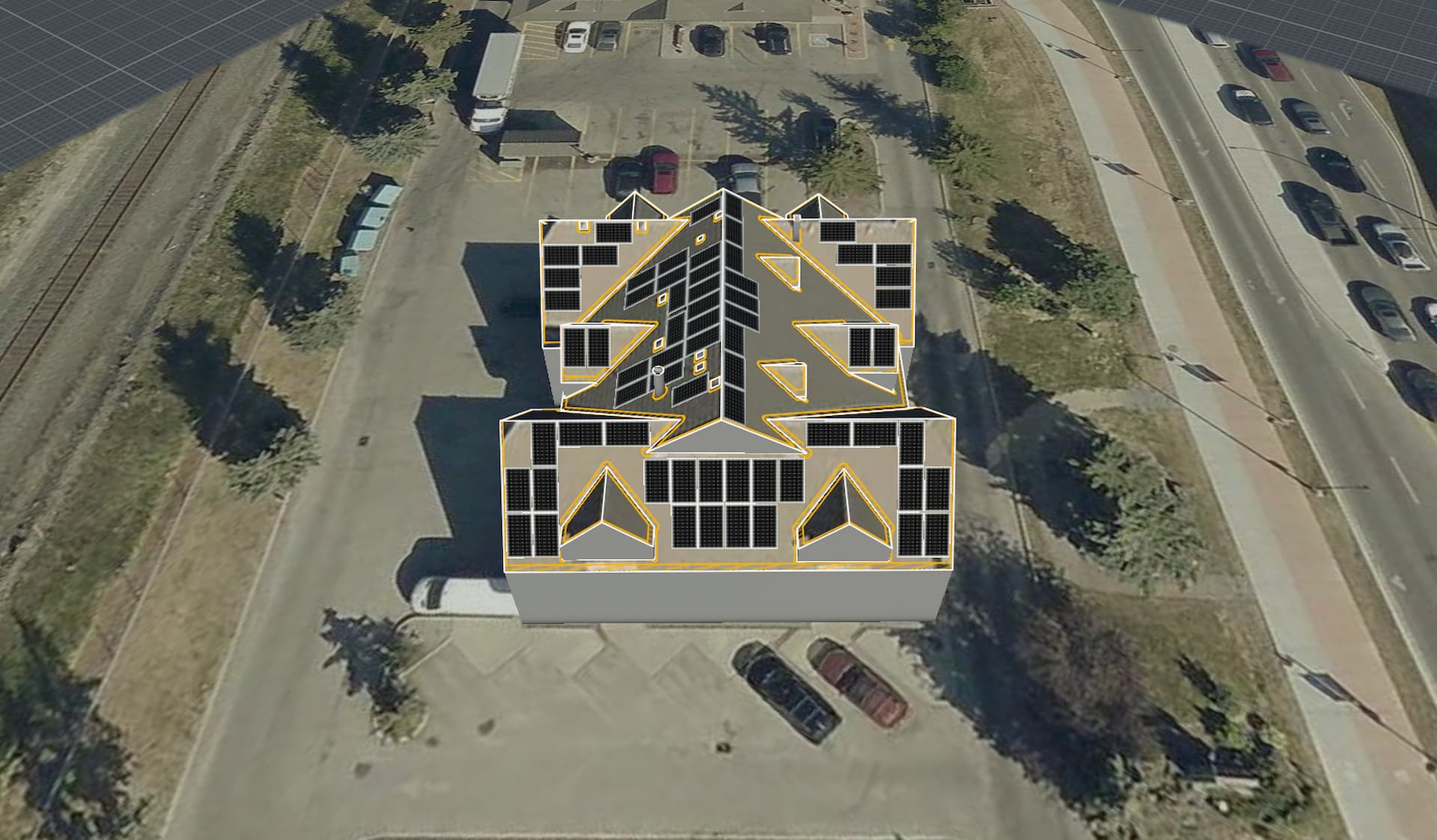
The Aurora Solar design model used to size the system against the building's recorded electricity use.
What Solar Incentives Can a Canmore Commercial Building Claim?
Three programs can apply to a commercial solar project in Canmore. Eligibility and the combined financial benefit depend on the project, and the Canmore figures below are the 2026 program terms.
| Program | What it offers | Key conditions |
|---|---|---|
| Town of Canmore Commercial & Multi-Family Solar Incentive (2026 program) | $750 per kW, to a $20,000 maximum | Installation and electrical inspection complete by December 15; recipients drawn by lottery if oversubscribed; systems already installed are not eligible |
| Clean Technology Investment Tax Credit (federal) | Refundable credit of up to 30% of eligible capital cost through 2033, and up to 15% in 2034 | Depends on the claimant and the equipment qualifying, on electing to meet prevailing wage and apprenticeship labour requirements, and on the property being acquired and available for use within the program window |
| Alberta micro-generation | Credits on your electricity bill for power exported to the grid, rather than an upfront payment | Systems under 150 kW fall in the small micro-generation category and are credited monthly at retail rates; 150 kW is a category boundary, not Alberta's maximum system size |
Worth knowing before you size anything: the Canmore rebate caps out. At $750 per kW you reach the $20,000 ceiling at 26.7 kW, so a 35 kW array earns the same rebate as a 27 kW one.
Applying takes a quote from an installer, ideally with a drawing of the proposed array, and everything has to be installed and electrically inspected by December 15. Start planning well before the application deadline. Funding applications and the December 15 installation deadline are separate milestones, and a complex roof needs room in the schedule.
The 2026 round has closed, and the Town directs owners to check back for 2027. Rates, caps, and dates for that round have not been published, so treat the figures above as what the program has offered rather than a promise of what it will offer.
The Canmore figures above come from the Town of Canmore, which publishes the current program terms, eligibility rules, and application details.
See the Town of Canmore solar incentives →What Should You Ask Before Signing a Commercial Solar Contract?
Before signing, you should understand what is being proposed, why it suits your building, and what the installation will involve. A few questions can help make those details clear.
What to Ask For Before You Sign
- ✓Modelled production compared against your actual metered consumption, not your roof area
- ✓Confirmation that the roof has been assessed in person and the findings incorporated into the installation plan
- ✓A clear breakdown of what the quote includes, whether electrical upgrades are needed, and what could result in additional costs
- ✓A schedule that puts installation and inspection inside the incentive deadline
What Happened After the Installation?
Our relationship with Jenny continued beyond this project, growing into conversations about solar for other properties.
That ongoing trust means the most to our team. It grew through time spent together, questions worked through, and care taken with her building. Completing the installation mattered. Knowing Jenny felt comfortable coming back to us is what made the project especially rewarding.
Key Takeaways for Building Owners
- ✓A challenging roof doesn't automatically rule out solar. An in-person assessment helps establish what's possible and what the installation will require.
- ✓Your building's electricity needs should guide the design. Usage history, business operations, and metering help determine a suitable system size.
- ✓Look beyond the price of the quote. Thorough site assessments, clear answers, and a defined scope help you understand what you're paying for.
- ✓Discuss incentives early. Application requirements and completion deadlines should be part of the project plan from the start.
Own a commercial or multi-tenant building in Alberta? Bring us your electricity bills and your questions. We will assess the property in person and walk you through what an installation would actually involve.
Explore commercial solar with Nuvo →