Going Solar for Farms in Alberta: Is It Worth It? (2026 Guide)

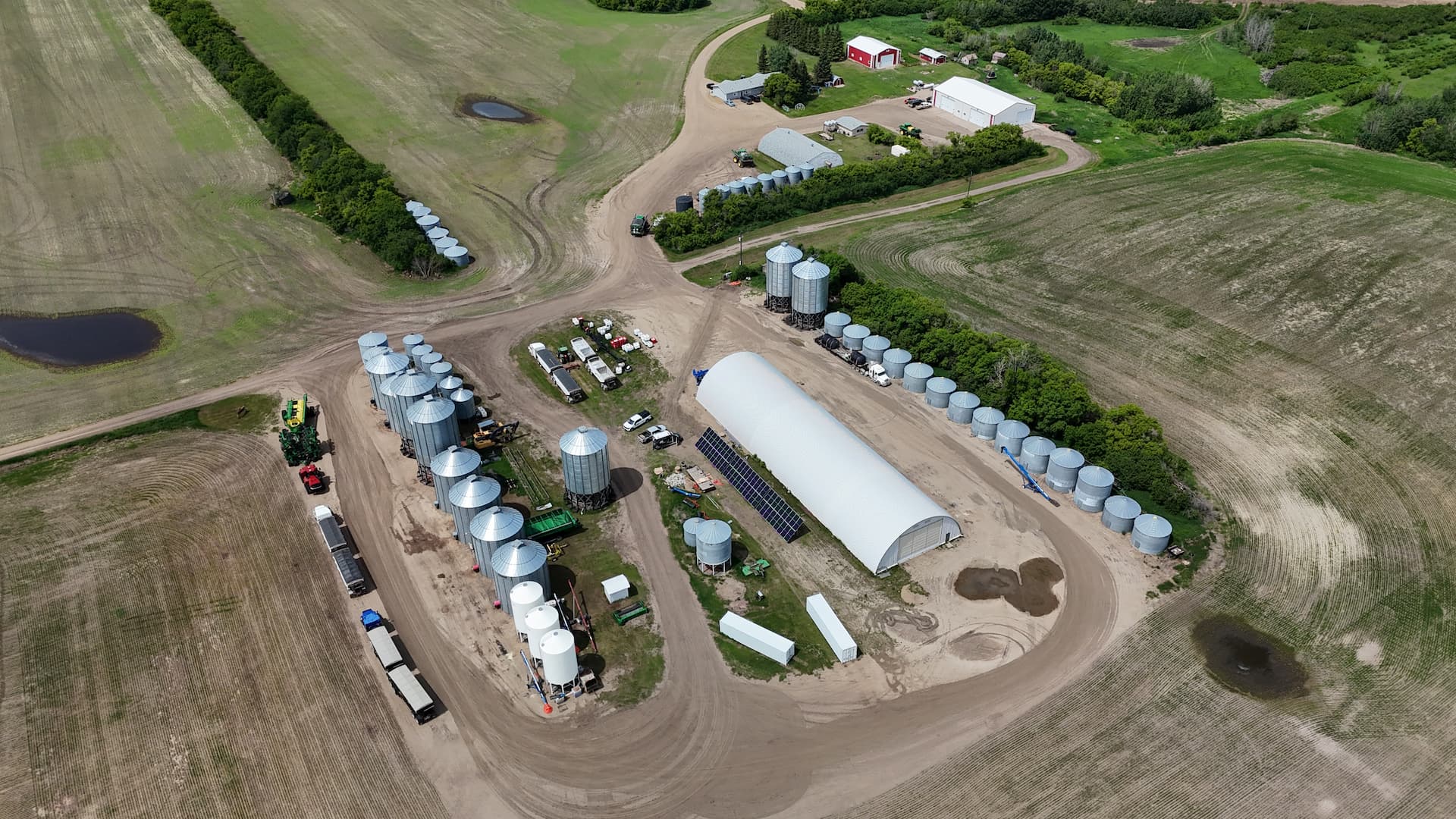
For many Alberta farmers, electricity isn't just another monthly bill, it's essential to running the operation. Grain dryers, irrigation systems, livestock ventilation, heated waterers, workshops, refrigeration, and processing equipment all depend on reliable power. That's exactly why farms are often among the strongest candidates for solar in Alberta.
Farm Solar in Alberta, At a Glance
- ✓Best suited for farms with high electricity use
- ✓Grid-tied systems under 150 kW earn credits at the full retail rate through Alberta's Micro-Generation Regulation
- ✓Systems can be designed around shops, barns, grain bins, and other structures
- ✓Financing and tax incentives exist for both incorporated and non-incorporated farms
- ✓Sizing is based on your actual usage, not your acreage
Why Are Alberta Farms So Well-Suited to Solar?
Farms are some of the highest electricity users in Alberta. Most homes have fairly predictable usage. A working farm is different.
Depending on your operation, electricity may be powering irrigation pumps, grain dryers and aeration fans, livestock ventilation, heated waterers, refrigeration, workshops, processing equipment, and multiple barns and outbuildings. These systems often run for long hours, or seasonally during periods of high demand, creating bills significantly higher than a typical home.
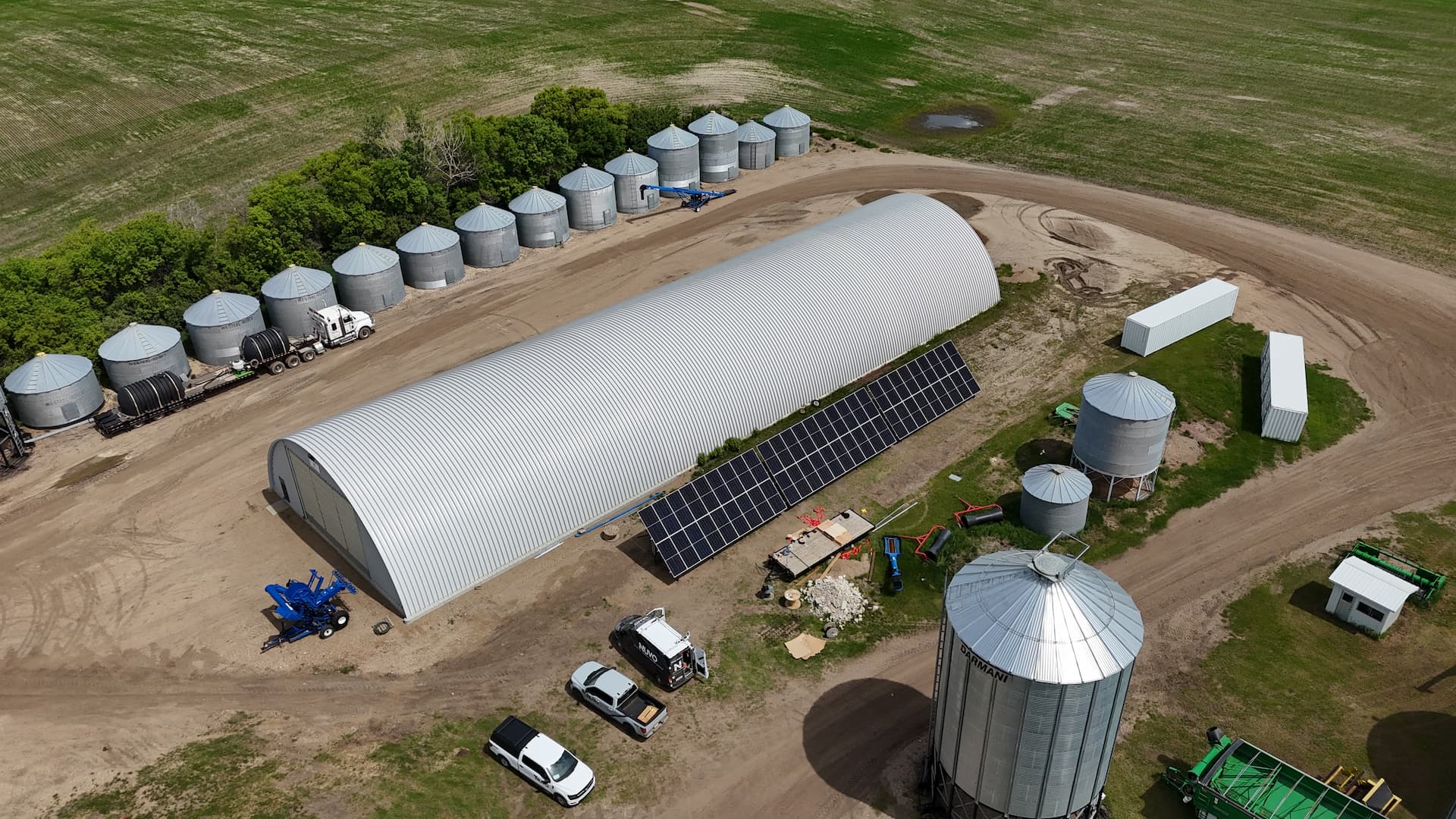
The more electricity your farm uses, the greater the opportunity to offset those costs with solar. Farm properties also tend to offer large roof space on shops and barns, or open land suited to ground-mounted arrays, making it easier to design a system around the entire operation rather than one building.
How Does Net Metering Work for Alberta Farms?
Net metering credits your farm for the extra electricity your system sends back to the grid. When you produce more than you use at a given moment, that excess exports automatically, and your utility applies a credit toward electricity you purchase later.
During sunny summer months, many farms generate more than they consume, building credits that offset higher winter use. You do not need to produce every kilowatt-hour you use every day, the grid effectively acts as your backup.
Does Alberta Offer 1:1 Net Metering?
For most farms, yes. Systems under 150 kW, which covers the majority of Alberta farm operations, earn credits at the full retail rate. Every kilowatt-hour your system sends to the grid earns a credit at the same rate you pay to buy power back later. Larger systems work differently. Operations from 150 kW to 5 MW are credited at the hourly wholesale market price on the power they export, which is typically lower than retail. This is one of the most important reasons to size a system around your actual consumption rather than overbuilding, and it is something we determine for you during the assessment.
Some provinces credit all exports at a lower rate than what customers pay to import, quietly reducing the long-term value of solar production. For systems in the retail rate tier, Alberta's approach lets you capture significantly more value from what your system generates.
What Size Solar System Does My Farm Need?
The right size isn't determined by your property's size, it's determined by how your farm uses electricity. A grain operation running multiple aeration fans has very different needs than a cattle operation with heated waterers. Even two similar-sized farms can need completely different systems.
That's why sizing starts with your electricity usage, not your acreage. Your past utility bills establish a baseline, so the system is built around what your farm actually consumes.
What Is the Difference Between Small and Large Micro-Generation?
Alberta splits grid-connected systems into two tiers, small micro-generation under 150 kW, and large micro-generation from 150 kW up to 5 MW. Most Alberta farms fall in the small tier. Larger operations, extensive irrigation, multiple grain bins, high demand across several buildings, may fall into the large tier instead.
The two tiers are also credited differently for exports, small systems at the retail rate, large systems at the wholesale market price, so the tier your farm falls into affects the value of every kilowatt-hour you send back. Larger systems can also involve additional utility requirements. An experienced installer determines which tier applies, manages that process, and sizes the system with the credit difference in mind, so it isn't something you need to navigate alone.
Should You Improve Energy Efficiency Before Installing Solar?
In many cases, yes. Reducing unnecessary electricity use can lower the size, and cost, of the system you need. Before designing anything, it is worth identifying opportunities like efficient lighting, upgraded motors, and improved ventilation.
A lower baseline often means a smaller system achieves the same offset. For many farms, the strongest results come from pairing efficiency improvements with a properly sized system.
Can One Solar System Power Multiple Barns and Buildings?
Yes, if your electrical infrastructure allows it. Most farms don't consist of a single building, barns, shops, grain bins, and pump houses are common. A well-designed system considers how electricity is distributed across the entire property, not just the farmhouse.
This is one of the most important things to review during a site assessment, since every farm's electrical layout is different.
Roof-Mounted or Ground-Mounted: Which Is Better for a Farm?
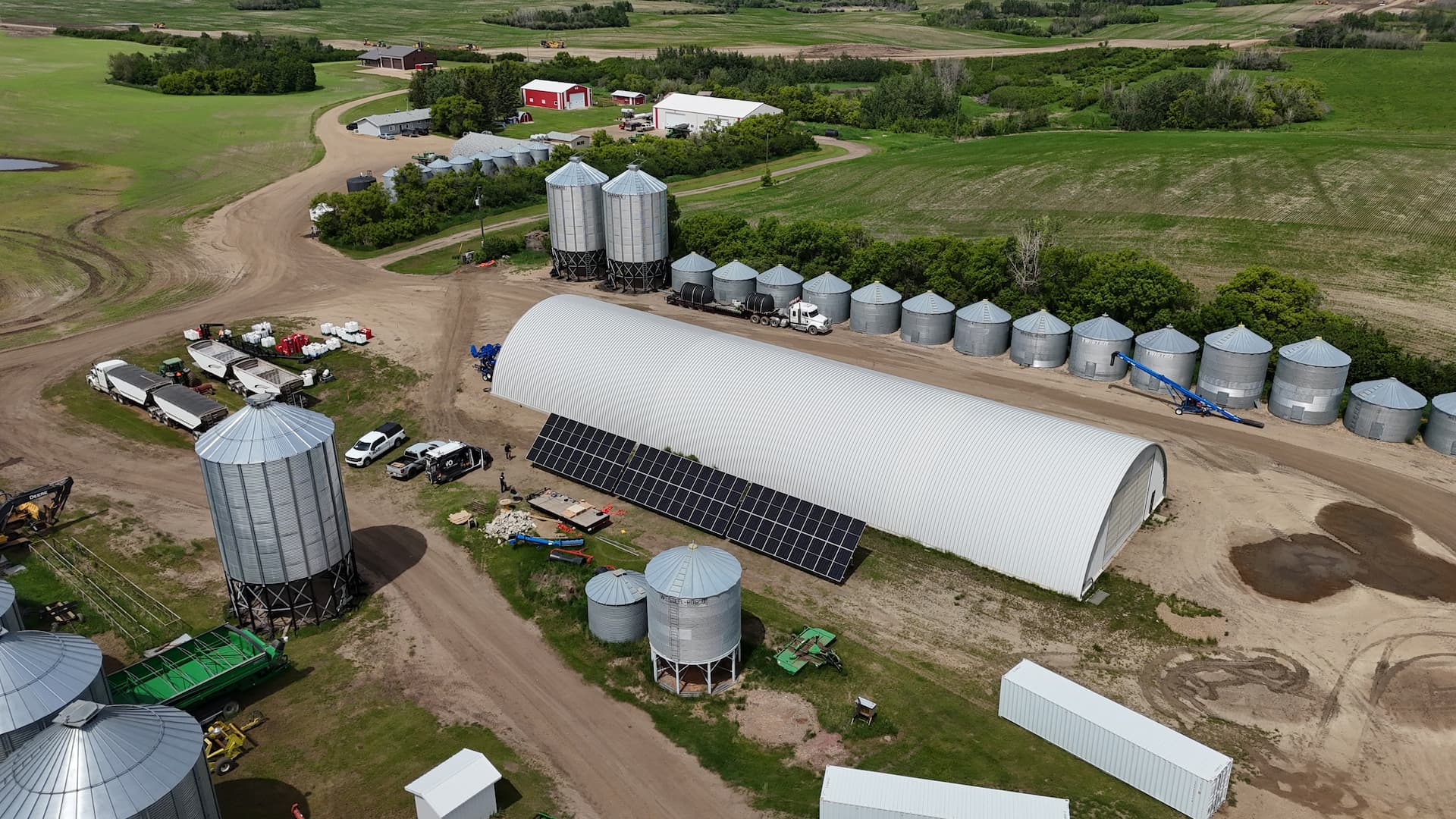
Both can work well. Roof-mounted systems on shops and barns often offer large, minimally shaded areas. Ground-mounted systems offer more flexibility, positioned for optimal sun exposure and easier to expand later.
For farms with abundant land and limited roof space, ground-mount is often the stronger fit.
Rather than sizing around assumptions, the design started with the property's real electricity consumption, then accounted for the additional buildings and equipment drawing power across the operation. The result is a system built to match how the property actually runs.
Should My Farm Be Grid-Tied or Off-Grid?
For most Alberta farms, grid-tied is the better financial choice. Off-grid systems are built for a specific kind of property, typically one without practical grid access. Most Alberta farms are already connected, which makes grid-tied significantly more economical.
With grid-tied, you lower your bills, export excess through net metering, and keep drawing from the grid whenever your system isn't producing enough. You don't need to oversize your system just to guarantee power overnight.
Off-grid still has a role, remote properties without nearby utility service, or isolated water pumping stations. In these cases, the cost of extending utility power can exceed a full off-grid system.
What About Power Outages?
Staying grid-tied doesn't mean giving up backup power entirely. For safety, most grid-tied systems automatically shut off during an outage unless paired with battery storage. On a working farm, an outage can affect livestock ventilation, heated waterers, well pumps, and refrigeration, consequences that go well beyond a home simply losing its lights.
Rural distribution lines also tend to be longer and more exposed to severe weather, which can sometimes result in longer outages than those experienced in urban areas. If your operation depends on equipment that must continue running during a power outage, battery storage may be worth considering. A properly designed backup system can help keep critical loads such as livestock ventilation, well pumps, refrigeration, and communications equipment—operating when grid power is unavailable.
We cover exactly how battery sizing, backup duration, and financing work in our full battery storage guide.
Read the Battery Storage Guide →How Long Do Solar Panels Last?
Modern panels are built to produce for decades. Most Tier 1 panels carry product warranties around 25 years, with performance warranties guaranteeing a high percentage of original output through that period. Many continue generating well beyond the warranty.
How Much Maintenance Does Farm Solar Require?
Very little. Unlike most farm equipment, panels have no moving parts. Maintenance is generally limited to occasional inspections and keeping panels reasonably free of debris, rain and snow handle much of that naturally.
Is Solar Worth It for Farms in Alberta?
For many farms, yes, though the right answer depends on your operation. Farms are often strong candidates because they combine higher-than-average electricity use, ample space, and long-term ownership that lets savings compound.
The key is designing a system around how your specific farm operates, not around averages. A grain operation has different priorities than a dairy farm. No two systems should look exactly alike.
Financing and tax incentives are a major part of that decision, including options available whether or not your farm is incorporated.
Read the Farm Solar Financing & Incentives Guide →Ready to see what solar could look like on your farm? The first step isn't signing a contract, it's understanding your options. Every Nuvo assessment reviews your historical electricity consumption, evaluates the best locations for installation, and provides production estimates based on your property's specific characteristics.
Frequently Asked Questions
Related Articles
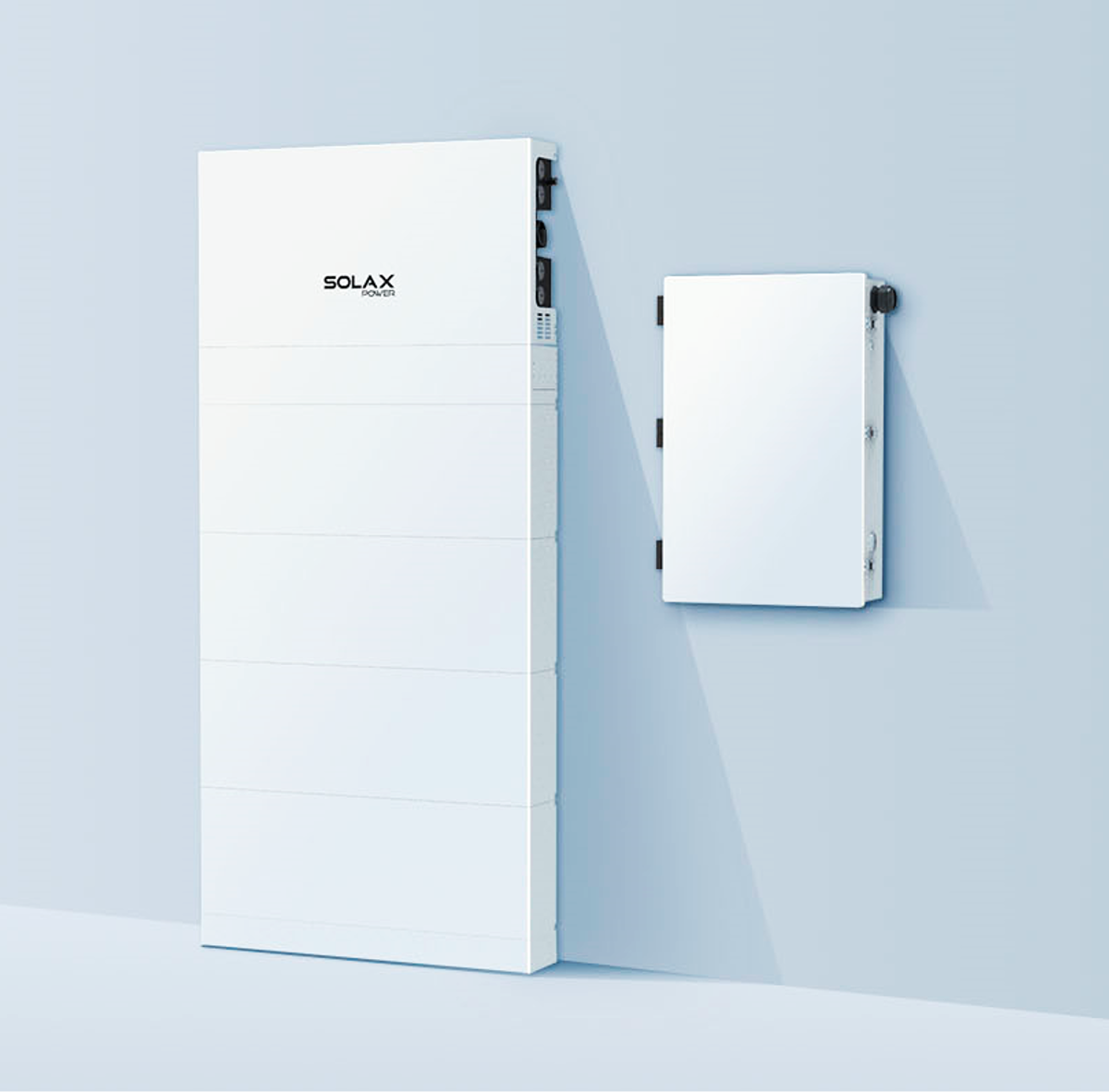
Battery Storage Explained: Is It Right for Your Alberta Home? (2026)
A home battery stores solar or grid power for later use, and automatically switches on during an outage. Here's what actually determines how long it lasts, and who it's genuinely worth it for.
Farm Solar Financing and Incentives in Alberta: A 2026 Guide
Financing and tax incentives can make farm solar significantly more accessible, whether or not your operation is incorporated. Here's exactly what's available in Alberta right now.