Residential Solar in Alberta
Understand how solar works in Alberta, how bill credits are calculated, and what to consider before installing panels on your home or acreage.
Residential Solar in Alberta, At a Glance
- ✓Alberta has some of Canada's strongest solar-generation potential
- ✓Your home uses its solar power first, and surplus electricity earns bill credits
- ✓Roof-mounted and ground-mounted systems are available
- ✓Your system is designed around your electricity use, property, and future needs
- ✓Municipal and in-house financing options may be available
- ✓30-year equipment and workmanship warranties
Is Residential Solar Worth It in Alberta?
For many Alberta homeowners, it can be. Alberta has some of Canada's strongest solar-generation potential, giving a properly designed system plenty of opportunity to produce electricity throughout the year.
Your home uses the solar power it produces first. When your panels make more electricity than you need, the extra goes to the grid and earns credits on your bill. Over time, this can reduce how much electricity you need to buy and limit your exposure to future energy-price changes.
Your actual savings depend on your roof, shade, electricity use, system size, and electricity plan, which is why a home-specific solar assessment matters.
How Does 1:1 Net Billing Work in Alberta?
Alberta uses a system called net billing. For most residential solar systems, surplus electricity sent to the grid is credited at the same retail energy rate you pay when buying electricity from the grid.
During the day, your home uses the solar electricity it needs first. Any extra power goes to the grid and earns bill credits. At night, when your panels are not producing, your home buys electricity from the grid. The credits earned during the day help offset the energy you purchase later.
Solar panels
make power
Your home
uses what it needs first
The grid
gets the extra
Day: Extra solar goes to the grid and earns bill credits.
Extra daytime solar
Earns bill credits
Helps pay for power used at night
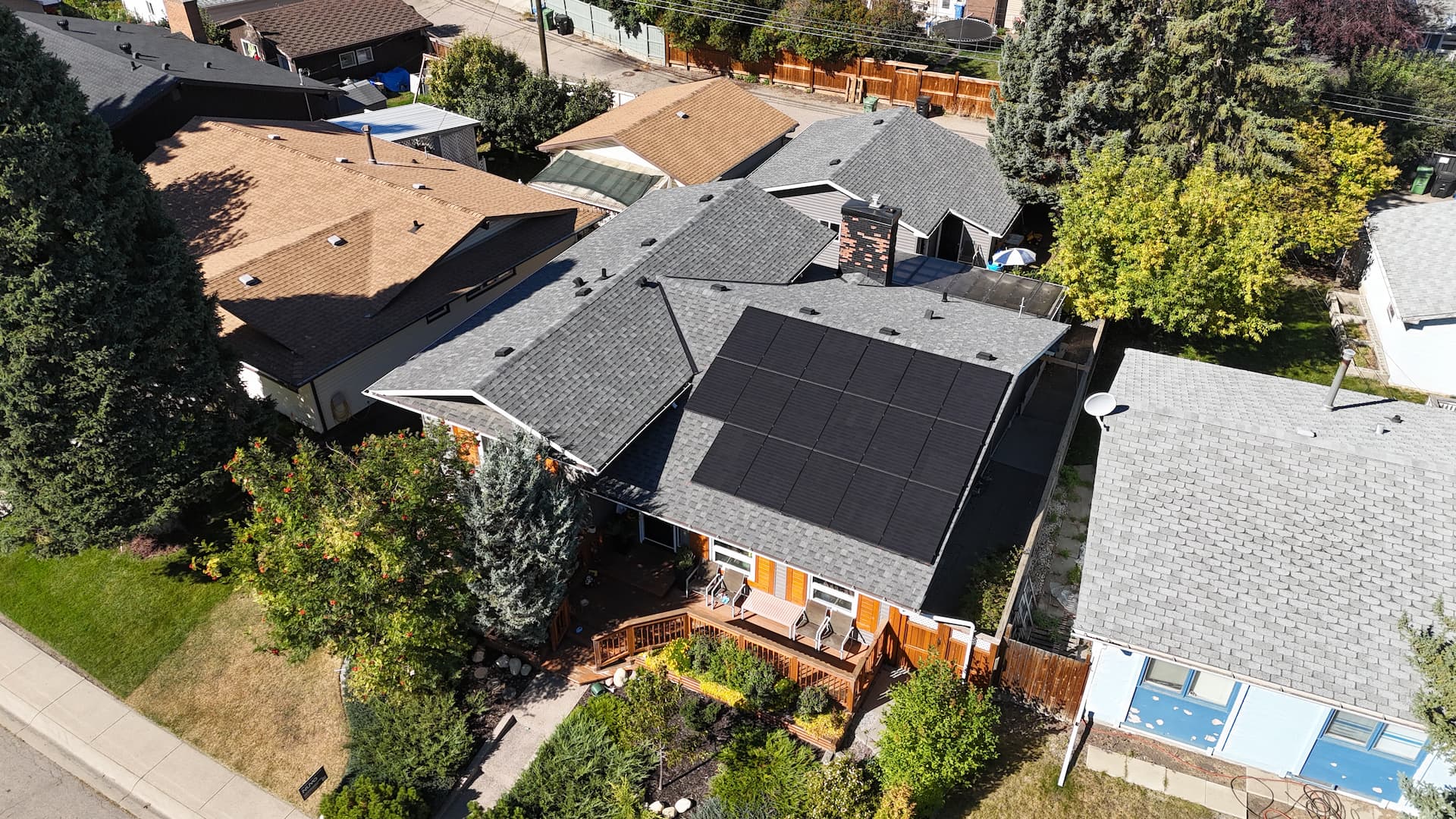
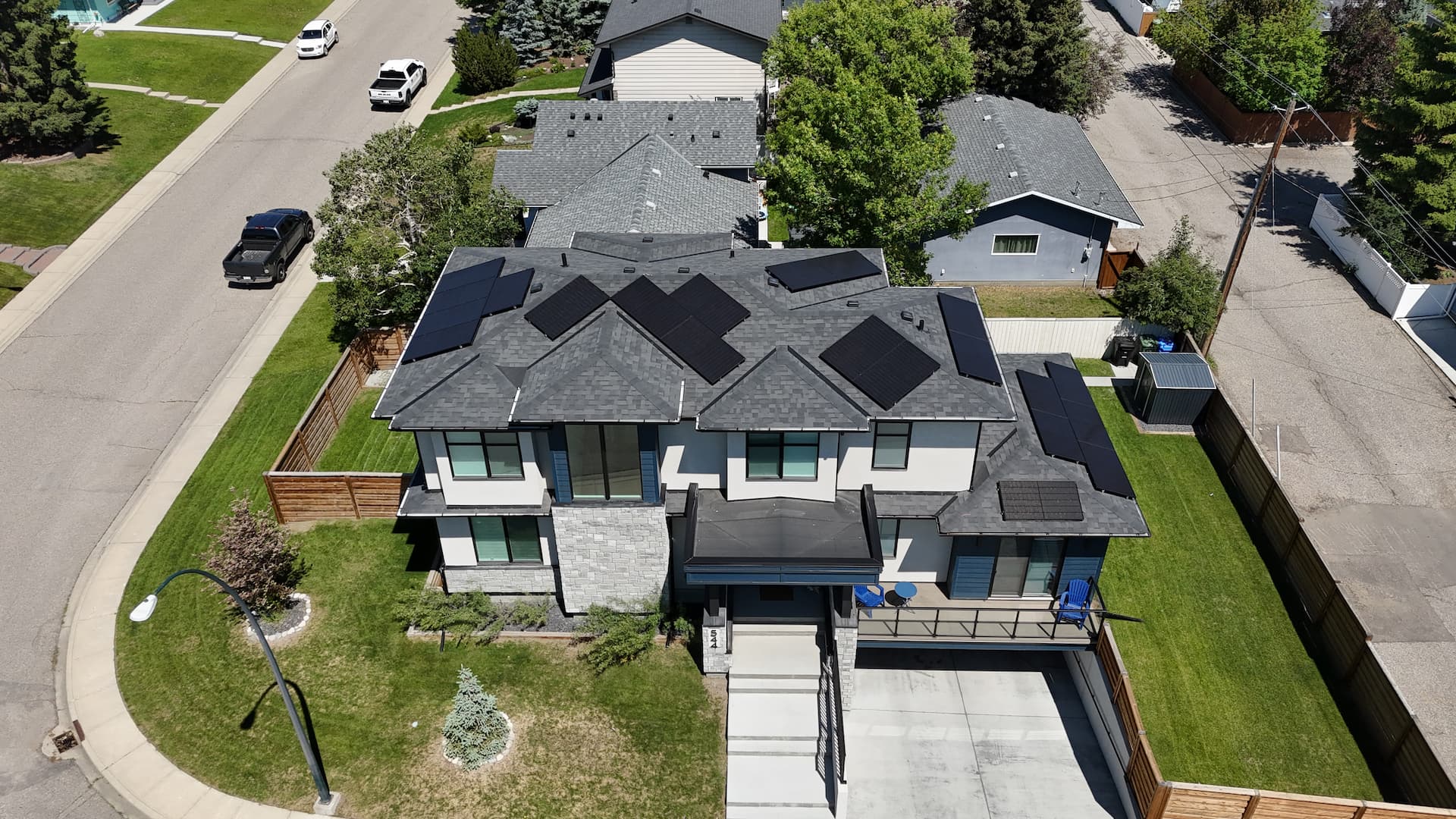
How Does Residential Solar Work on a City Home?
Most home solar installations in Alberta qualify as small micro-generation systems because they are well below 150 kW. These systems are designed primarily to meet the property's own electricity needs.
A residential solar assessment considers:
- ✓Your annual electricity use
- ✓Roof direction, pitch, and available space
- ✓Shade from trees and nearby buildings
- ✓The age and condition of your roof
- ✓Electrical panel and utility requirements
- ✓Your future plans, including an EV, heat pump, or home addition
Nuvo handles the system design, permits, and utility application so you do not have to navigate the micro-generation process alone.
Common Question
Does solar work during winter?
Yes. Panels keep generating whenever sunlight is available, production is naturally lower with shorter days and a lower sun angle, but cold temperatures can actually improve panel efficiency, meaning the panels themselves aren't working against you, there's just less daylight to work with.
Can You Install Solar on an Alberta Acreage?
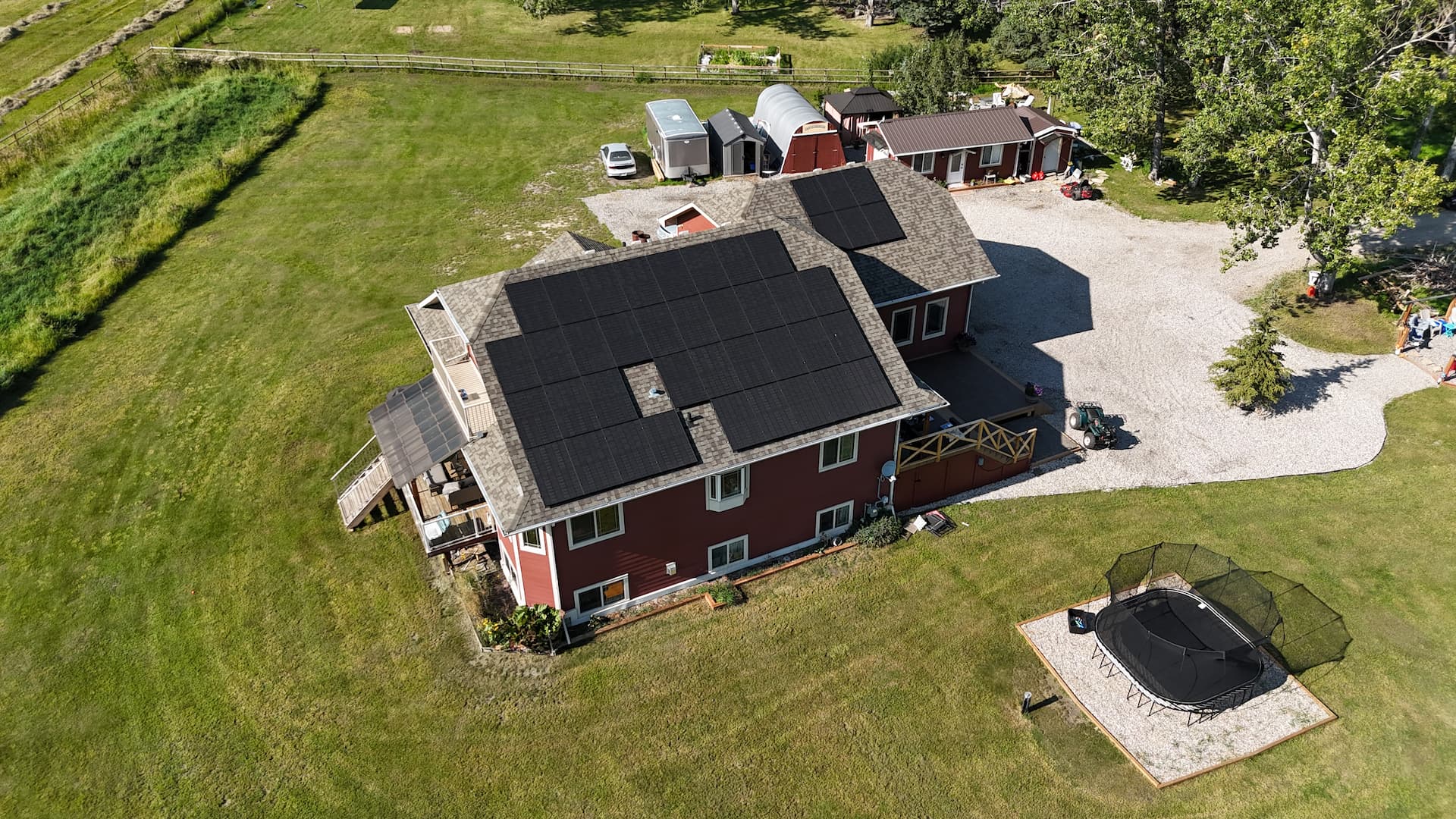
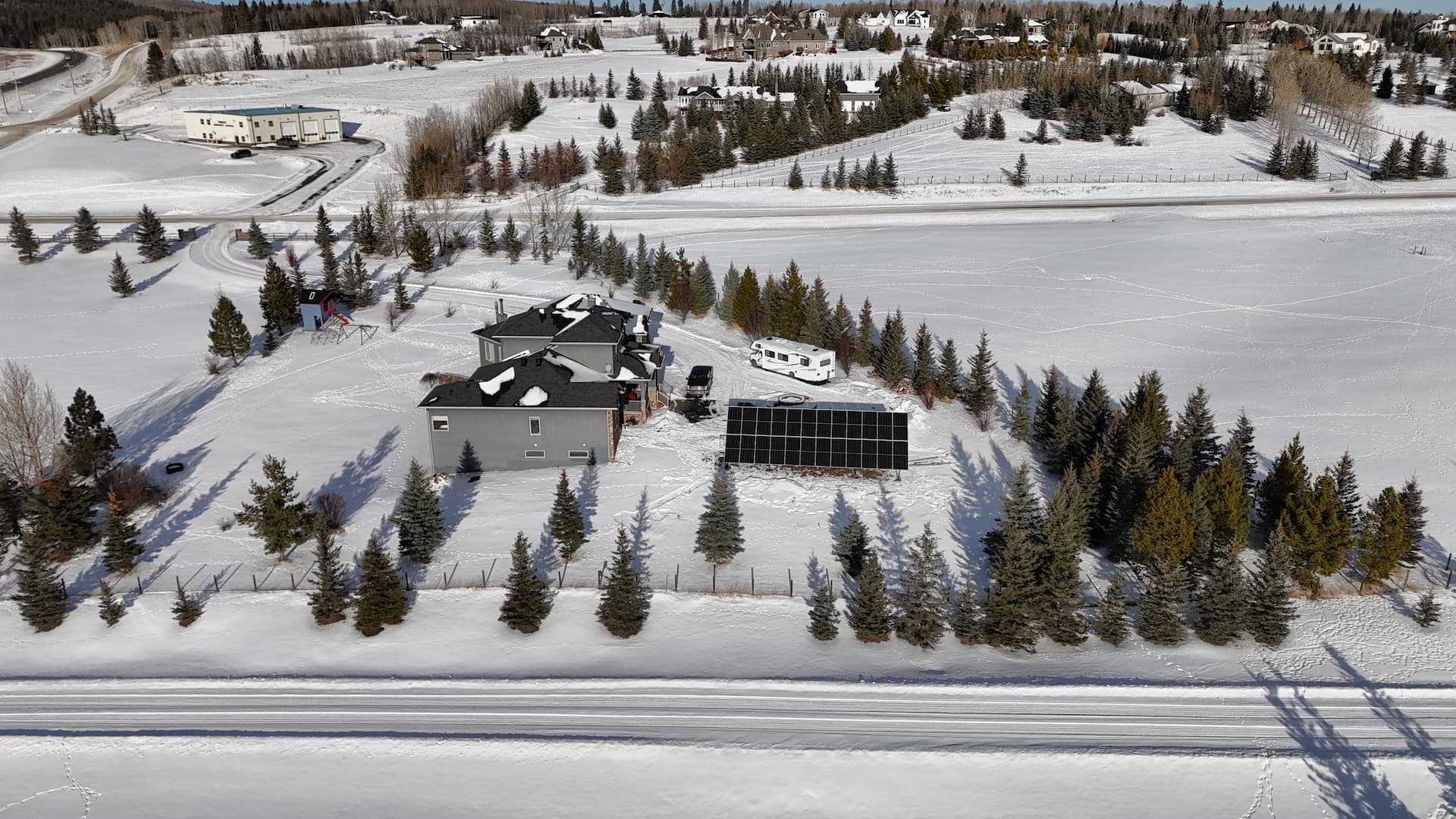
Yes. Acreage properties often provide more options because solar panels can be installed on a home, garage, shop, or ground-mounted structure.
Roof-mounted solar
Roof-mounted panels preserve the surrounding land and can be a cost-effective choice when a building has suitable orientation, structure, and available space.
Ground-mounted solar
A ground-mounted system allows more control over panel direction and tilt. It can be a good option when the roof is shaded, has limited space, or is not well suited to solar.
The best choice depends on roof condition, shading, land use, trenching distance, soil conditions, and project cost. Nuvo assesses both options before recommending a design.
What Is Solar Club and Is It Worth It?
Solar Club is an optional electricity-rate program for eligible small micro-generators in Alberta, offered by Spot Power, one of our trusted partners.
When your property exports more electricity than it buys, switching to the high rate can increase the value of your solar credits. When your property starts buying more electricity than it exports, switching to the low rate can reduce the energy cost of those purchases. Because the selected rate affects both imported and exported electricity, switching at the right time matters. Nuvo helps customers understand their expected production and consumption patterns and determine whether Solar Club is appropriate for their home.
Spot Power also offers an optional automatic RateSwitch service based on the property's net import or export status.
Lo rate, winter import
5.9c/kWh
Hi rate, summer export
35c/kWh
Current Spot Power Solar Club Rates
High rate: 35.00¢/kWh Low rate: 5.90¢/kWh
Rates verified August 2026. Rates, eligibility requirements, and program terms may change. Confirm current information with Spot Power before enrolling.
What Does Residential Solar Cost in Alberta?
The cost of residential solar depends on the system size, roof complexity, equipment, electrical work, and installation conditions. As a rule of thumb, Alberta systems are priced between $2.00 and $3.00 per watt installed, so a $200 per month bill points to roughly an 11.1 kW system, priced from about $22,200 to $33,300 before incentives.
A useful solar proposal should clearly show:
- ✓System size and number of panels
- ✓Estimated annual electricity production
- ✓Available financing and its total cost
- ✓Equipment and workmanship warranties
- ✓Expected maintenance or replacement costs
Estimate your system
Enter your average monthly power bill.
Are Solar Rebates or Financing Programs Available in Alberta?
As of August 2026, the Canada Greener Homes Grant and Canada Greener Homes Loan are closed to new applicants. Alberta does not currently offer a province-wide residential solar rebate.
Some municipalities offer local incentives or participate in the Clean Energy Improvement Program. CEIP can finance eligible energy improvements through a charge added to the property-tax bill. Availability, financing limits, interest rates, and repayment terms vary by municipality, and terms may extend up to 25 years.
Nuvo also offers comprehensive in-house financing options, subject to approval.
Your Solar Journey
From first interaction to clean energy in 6 simple steps
Site Survey
We evaluate your property's solar potential and energy needs
Custom Design
Our team creates a system tailored to your home and budget
Free Consultation
We walk you through your personalized solar proposal
Permits & Prep
We handle all permits and utility applications, so you don't have to
Professional Installation
Certified solar electricians install your system within 2-3 days
Activation & Support
Your system goes live, and we monitor performance for the long run
Complete Your System
Ready to See What Solar Could Look Like on Your Home?
Every Nuvo assessment reviews your actual electricity usage, evaluates your roof or property layout, and walks through real financing options, before you make any decisions.
Get Your Free Quote